Tactile sensing enables great benefits for robotic manipulation, yet the algorithms used to interpret
tactile-sensor data often fail to generalize across different sensor types because of incompatible signal
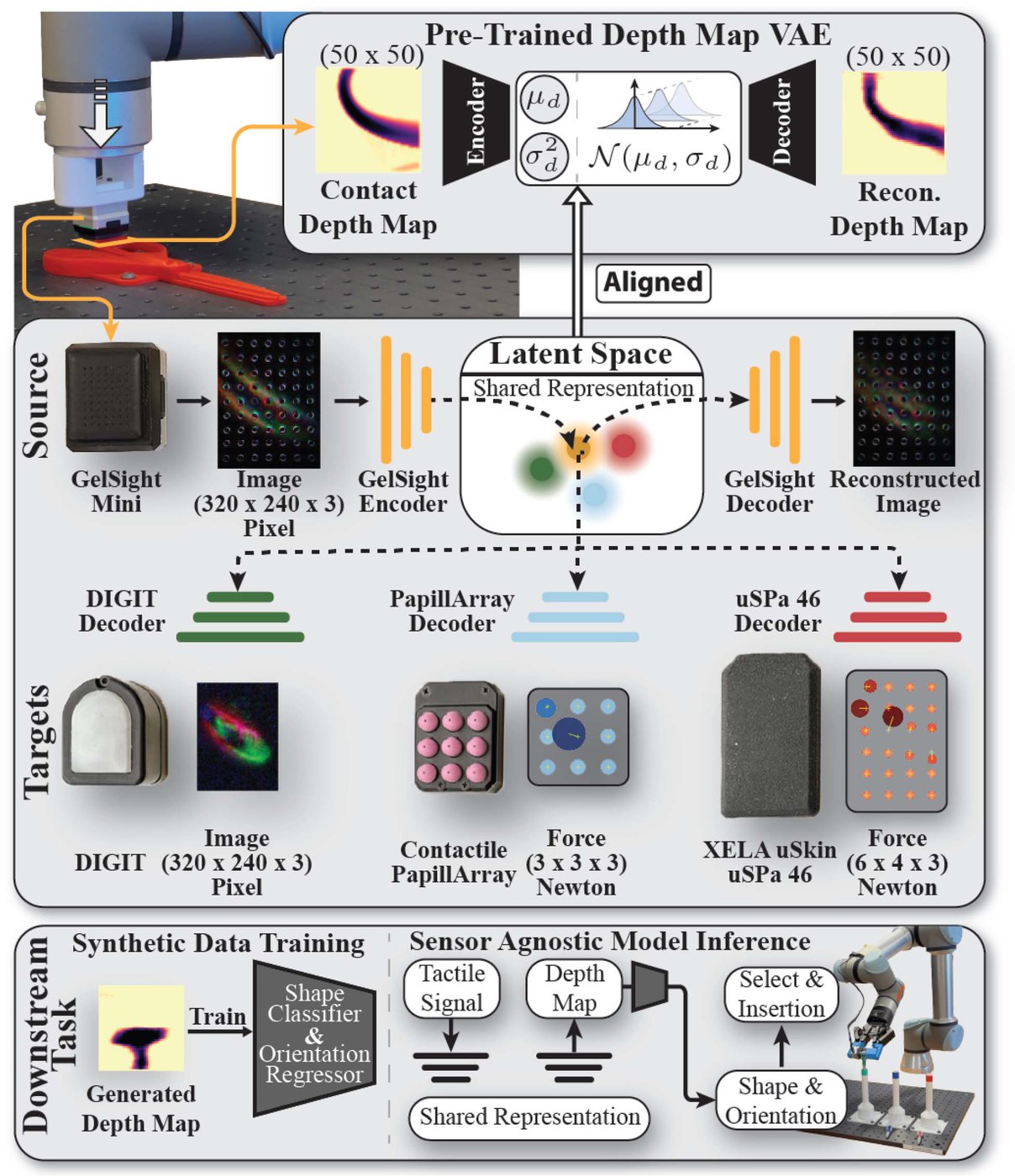
formats and distributions. We present UniTac-VAE, a unified tactile representation framework that aligns
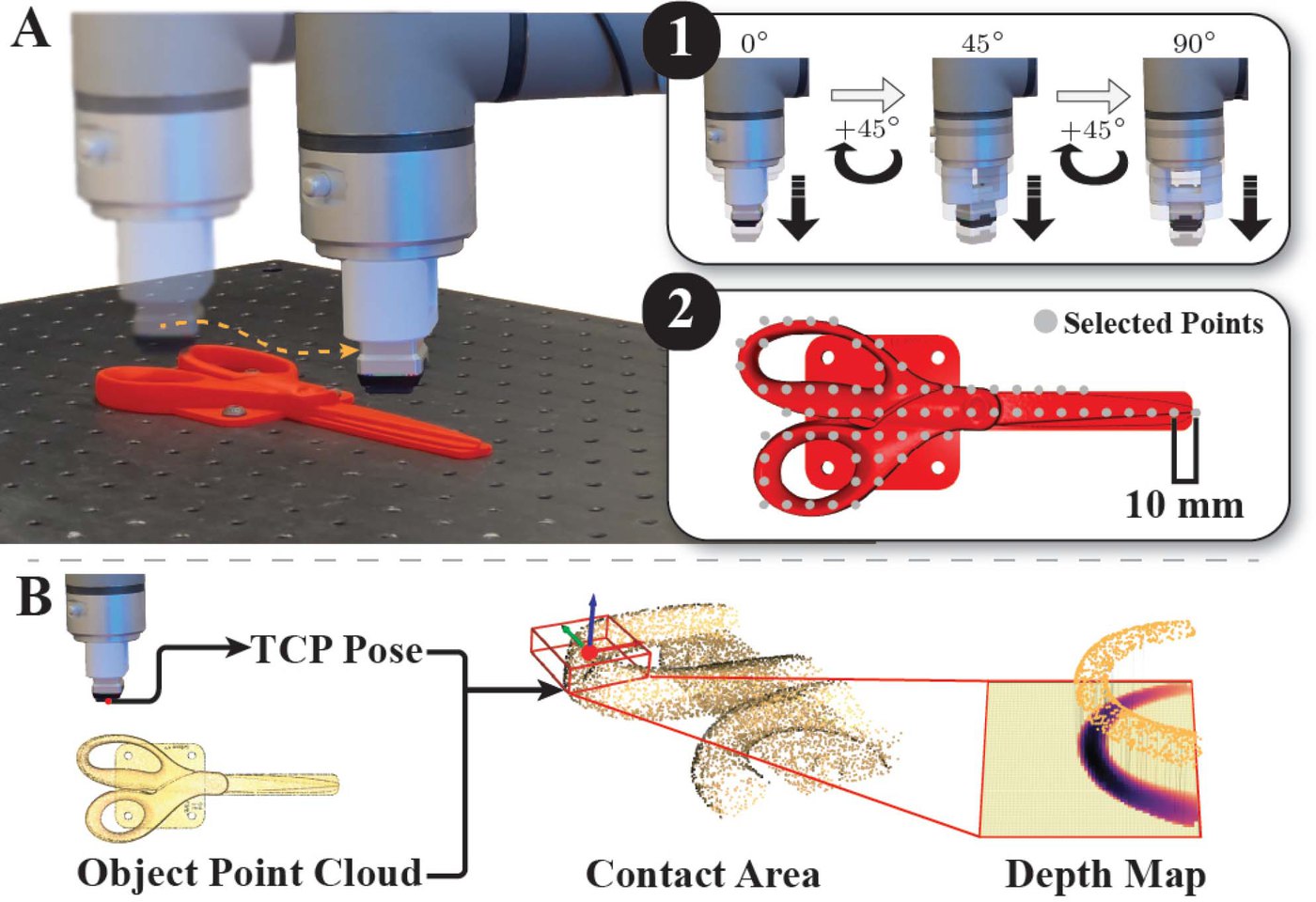
heterogeneous tactile modalities to a shared, geometry-grounded latent space using local contact depth maps
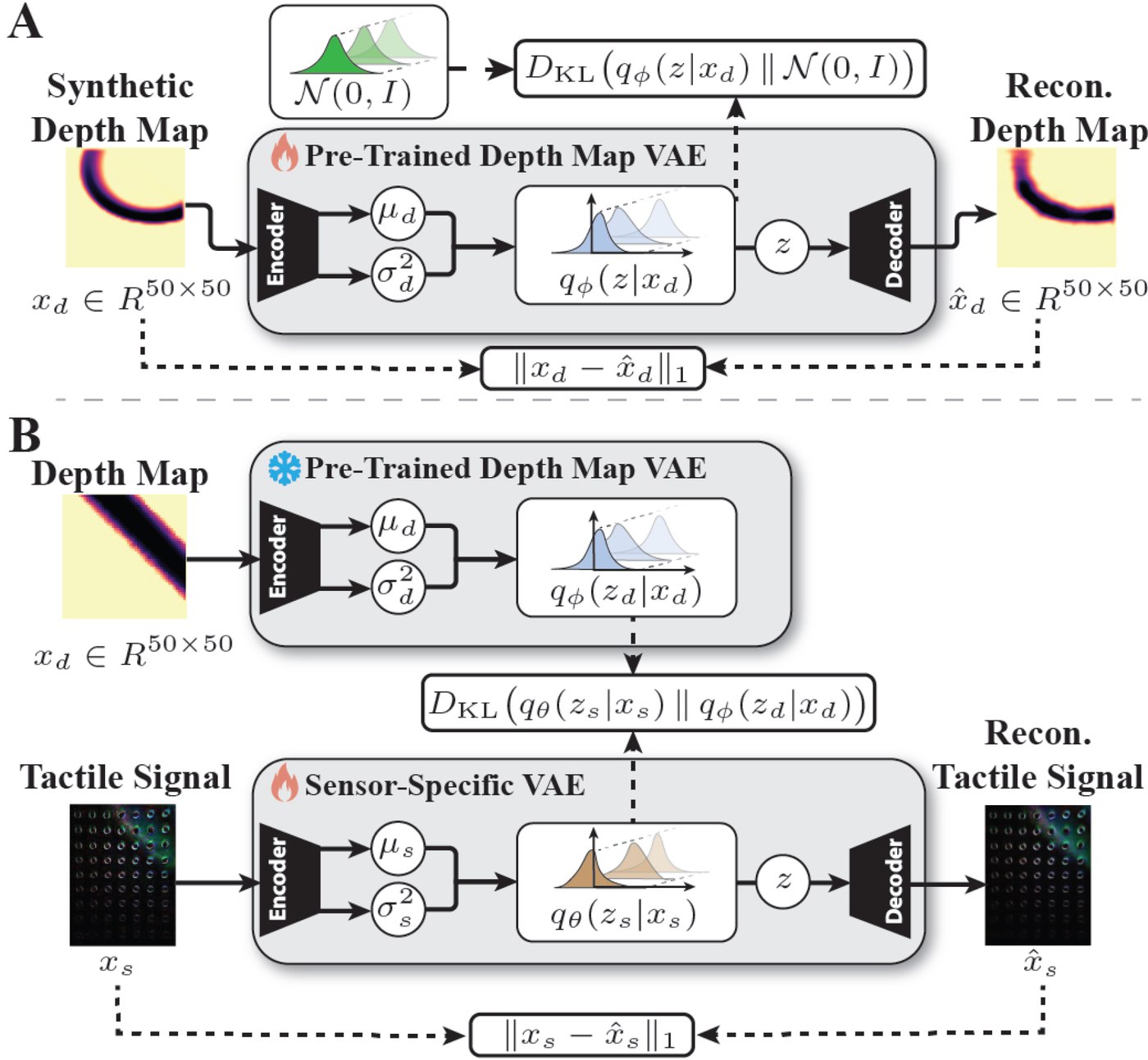
as a sensor-agnostic common language. UniTac-VAE first trains a depth-map Variational Autoencoder (VAE) to
define a target latent distribution. Each tactile sensor is then modeled by a sensor-specific VAE that jointly
reconstructs its native signals and aligns its latent distribution to the paired depth-map latent
distribution via a frozen depth encoder. This avoids sensor-to-sensor paired data and allows new sensors to
be added without retraining existing modules.
Benchmarking across vision-based and taxel-based sensors shows that UniTac-VAE maintains high reconstruction
accuracy while establishing a more sensor-agnostic latent space. We further validate the representation on a
downstream shape-recognition and peg insertion task, where a single model trained on synthetic depth maps is
deployed across vision-based and taxel-based sensors, operating on real-world tactile inputs. We have
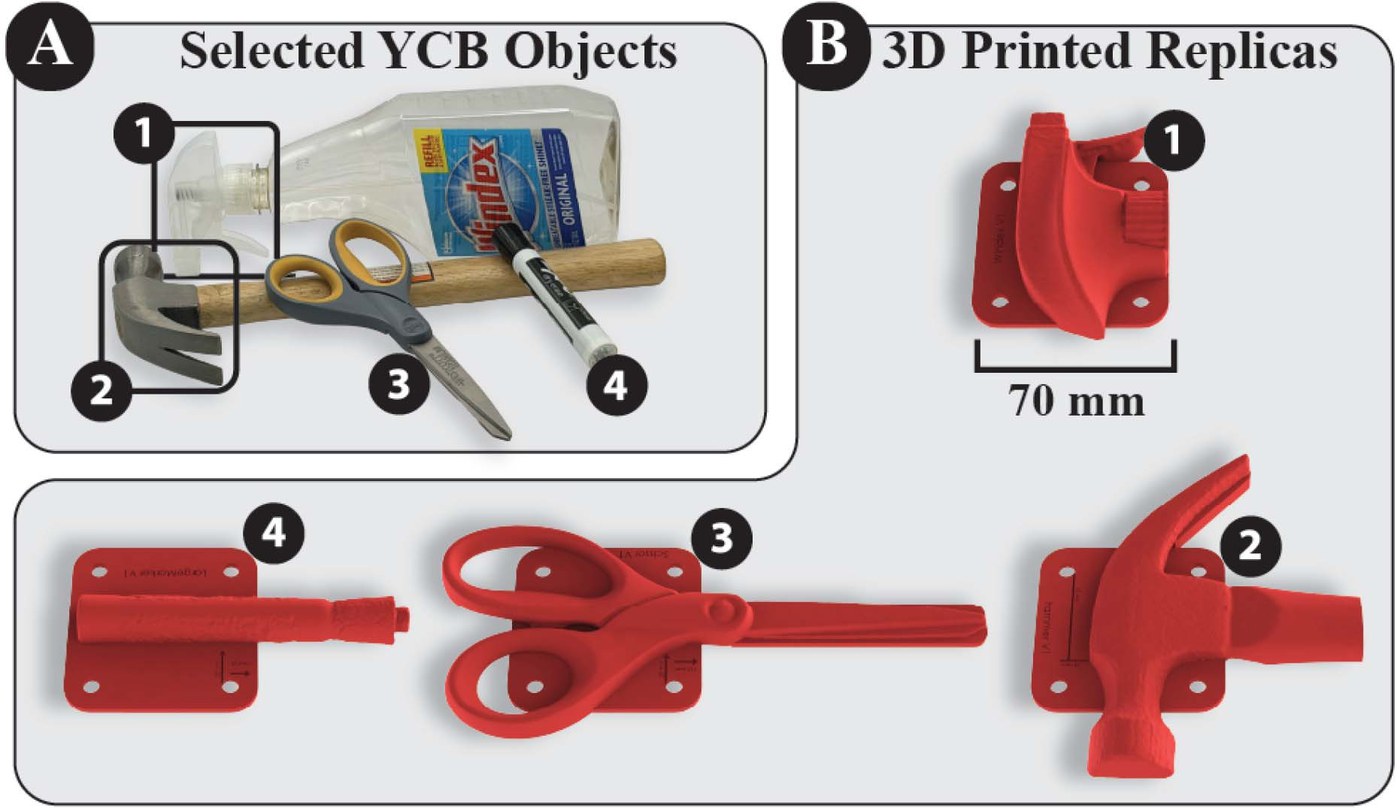
open-sourced the collected dataset, pairing each contact across four commercial sensors with a depth map
derived from YCB meshes.